
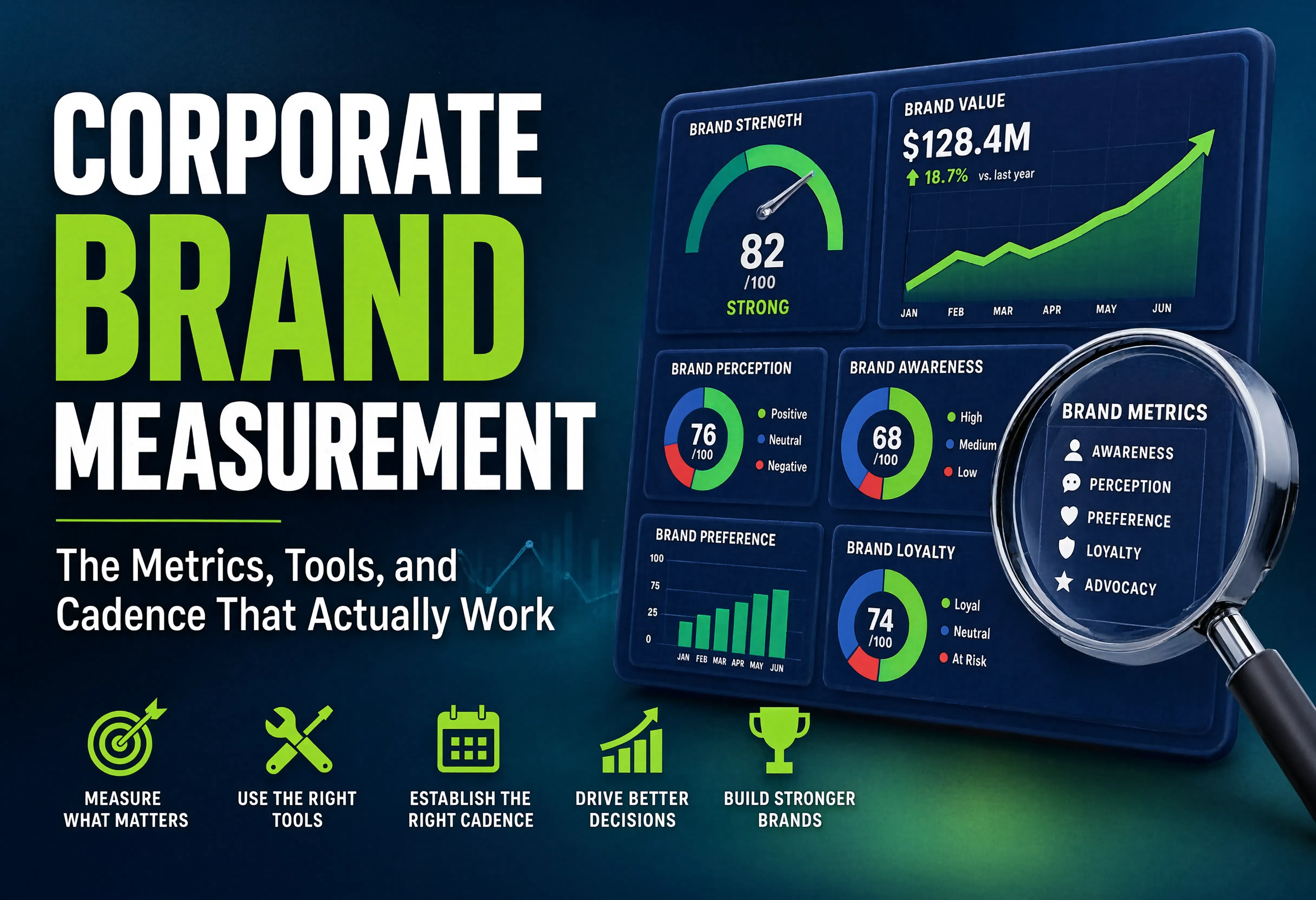
Branding without measurement is just aesthetic preference. The companies that treat brand strategy as a genuine operating discipline track a small, consistent set of metrics over time, rather than relying on internal opinion or one-off surveys before a rebrand. Here's how each of the core brand metrics actually works in practice, what tools measure them, and what a realistic measurement cadence looks like.
Brand Awareness
Brand awareness measures whether your target audience knows your company exists, and in what context they recognize it. It's typically split into two types:
Aided recall measures recognition when a brand name is presented, for example, "Have you heard of [Company]?" This shows the ceiling of your reach, how many people in your target market could recognize you if reminded.
Unaided recall measures recognition without any prompt, for example, "Name the companies you think of when you think of [category]." This is the harder, more valuable metric, since it reflects genuine top-of-mind presence rather than passive recognition.
How to measure it: Structured brand tracking surveys, typically run quarterly or twice a year, using a consistent question set so results are comparable over time. Tools like Brandwatch, YouGov BrandIndex, or simpler in-house survey tools (Typeform, SurveyMonkey) paired with a consistent methodology work for most companies; large enterprises sometimes commission dedicated brand tracking studies from research firms.
A reasonable benchmark: There's no universal target, since awareness depends heavily on market maturity and company age, but tracking the trend over time matters more than any single snapshot. A meaningful move is typically a shift of several percentage points over two to three consecutive tracking periods, not a single quarter's fluctuation.
Brand Sentiment
Sentiment measures the emotional tone associated with your brand, positive, negative, or neutral, as expressed in public conversation: reviews, social mentions, and news coverage.
How to measure it: Social listening tools (Brandwatch, Sprout Social, Meltwater, or simpler free tools like Google Alerts for smaller companies) tracking mention volume and tone over time. Review site monitoring (Trustpilot, G2, Glassdoor depending on your business type) adds a more structured data source than social listening alone.
What to watch for beyond the raw score: Sudden sentiment shifts tied to a specific event (a product launch, a service issue, a PR moment) are more actionable than the slow background average, since they show you exactly what caused the shift and give you a clear signal of what to address.
Net Promoter Score (NPS)
NPS measures how likely customers are to recommend your company to others, typically on a 0–10 scale, with the score calculated as the percentage of promoters (9–10) minus the percentage of detractors (0–6).
How to measure it: A single-question survey sent post-purchase or post-interaction, run consistently (not just during satisfaction campaigns), using tools like Delighted, Qualtrics, or a simple embedded survey through your existing customer communication platform.
A reasonable benchmark: NPS varies enormously by industry, B2B SaaS companies often average in the 30–50 range, while some consumer categories run lower. The more useful comparison is your own trend over time and your position relative to direct competitors in your specific category, not a generic external number.
Share of Voice
Share of voice measures your visibility relative to named competitors, how much of the total conversation in your category is about you versus them, across media coverage, social mentions, search visibility, or advertising presence depending on what's most relevant to your industry.
How to measure it: Media monitoring tools that track mention volume across your company and a defined competitor set (Brandwatch, Meltwater, or SEO tools like Semrush and Ahrefs for search-specific share of voice). The key setup step is defining your actual competitor set clearly before tracking starts, since share of voice is only meaningful relative to the right comparison group.
Why it matters beyond vanity tracking: A declining share of voice, even with your own metrics holding steady, often signals a competitor gaining ground before that shows up in harder metrics like revenue or customer acquisition.
Employee Brand Alignment
This measures whether employees, particularly customer-facing ones, actually understand and can articulate the brand's purpose and values, not just whether they've seen the guidelines.
How to measure it: Internal surveys asking employees to describe the brand's purpose in their own words, compared against the company's actual stated positioning, alongside more standard engagement survey questions about pride in the company and belief in its mission. Simple internal tools (Culture Amp, Officevibe, or even a well-designed internal form) work fine here; sophistication matters less than consistency and honest response conditions.
Why this metric gets skipped, and why it shouldn't be: It's the metric most directly tied to whether culture-led branding is actually working, since a brand promise employees can't articulate is unlikely to show up consistently in customer interactions, regardless of how good the external marketing looks.
Building a Single Brand Scorecard
Tracking five metrics separately, in five different tools, tends to mean none of them get reviewed consistently. A simple quarterly scorecard combining all five into one view, even a basic spreadsheet or dashboard, tends to work better than a more sophisticated but fragmented setup. The scorecard should show:
- Each metric's current value and its trend over the past 2–4 tracking periods
- A brief note on any specific event that likely caused a notable shift
- One or two action items tied to the biggest movement, positive or negative
A Realistic Measurement Cadence
Quarterly: Full scorecard review across all five metrics. This is frequent enough to catch meaningful shifts without over-reacting to short-term noise.
Monthly: Lighter-weight checks on sentiment and share of voice specifically, since these can shift faster than awareness or NPS and are more likely to be tied to a specific, addressable event.
Annually: A deeper brand audit alongside the quarterly scorecard, comparing year-over-year trends and reassessing whether the metrics being tracked are still the right ones for the company's current stage and goals.
The Bottom Line
Measurement only creates value if it changes decisions. A scorecard nobody reviews is no better than not measuring at all. The companies that get real value from brand measurement build it into an existing operating rhythm, tied to a specific review meeting and specific people accountable for acting on what the data shows, rather than treating it as a one-off exercise before the next rebrand.
For how measurement fits into the broader strategy, see our complete guide to corporate branding strategy.