
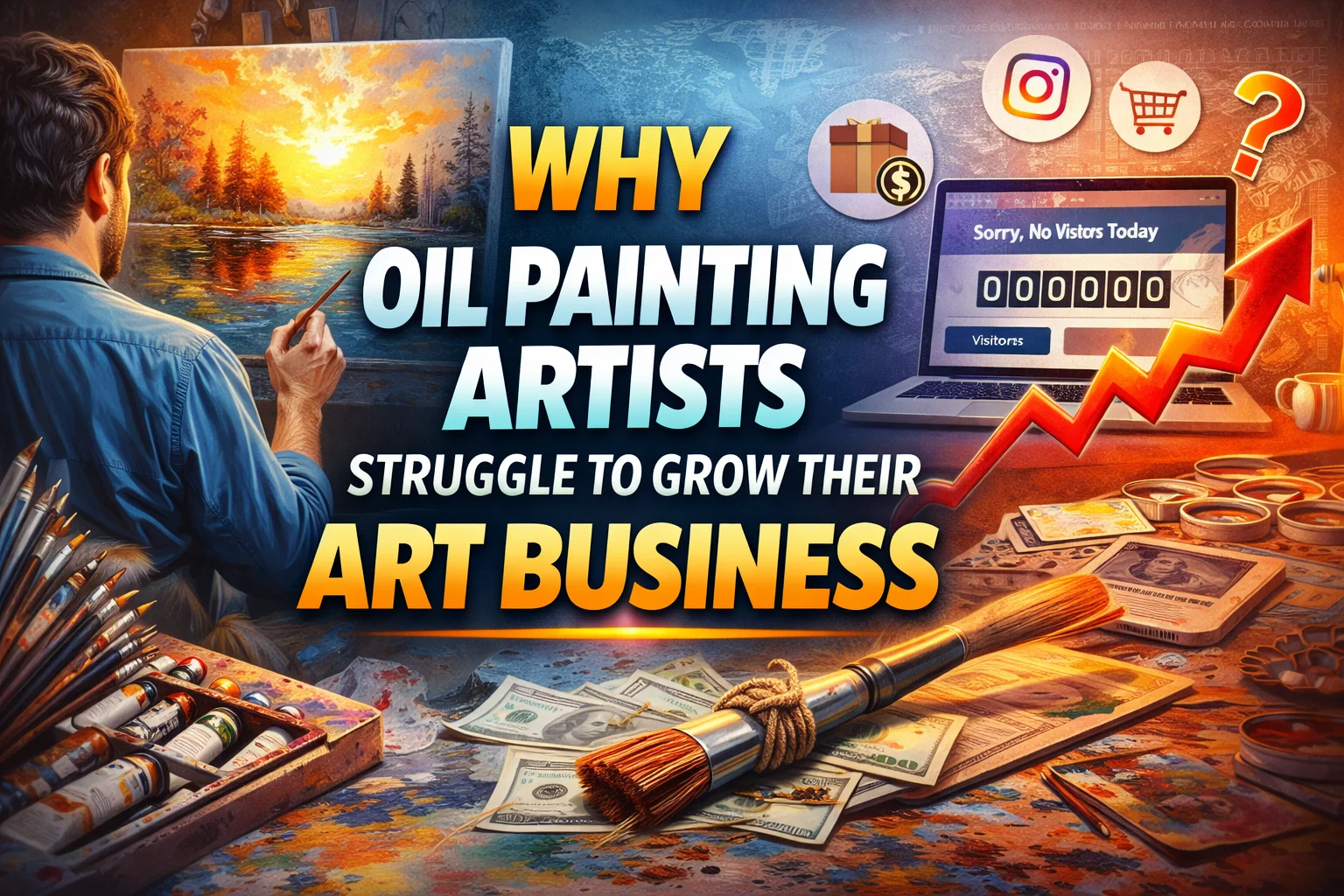
For centuries, oil painting has been considered one of the most prestigious and respected art forms. From the masterpieces of Leonardo da Vinci and Rembrandt to modern gallery exhibitions, oil paintings have always carried cultural and artistic value. However, in today’s digital world, many talented oil painting artists face a different kind of challenge, turning their passion into a profitable and sustainable business.
While creativity and skill remain essential, they are no longer enough to guarantee success. The modern art market has shifted dramatically toward digital discovery, online galleries, social media exposure, and personal branding. Unfortunately, many traditional artists struggle to adapt to these changes, which limits their ability to grow their audience and generate consistent income.
In this article, we explore the major reasons why oil painting artists struggle to grow their business and how digital marketing strategies can help them reach a global audience and build a thriving art career.
The Changing Landscape of the Art Industry
The art industry has evolved significantly over the past decade. Traditionally, artists relied on physical galleries, exhibitions, and art dealers to showcase and sell their work. While these channels still exist, the internet has completely transformed how art is discovered and purchased.
Today, collectors and buyers often discover artists through:
- Social media platforms
- Online art marketplaces
- Artist websites and portfolios
- Digital exhibitions and NFT galleries
- Search engines like Google
This shift means artists who do not have a strong online presence often struggle to compete with those who actively use digital platforms to promote their work.
Major Challenges Oil Painting Artists Face in Growing Their Business
1. Limited Online Presence
One of the biggest obstacles many traditional artists face is the lack of an online presence. Many oil painters rely solely on physical exhibitions or word-of-mouth promotion.
Without a professional website or online portfolio, potential collectors cannot easily discover or purchase their artwork. In today's digital economy, visibility online is just as important as talent.
Artists who fail to build a digital presence miss opportunities to reach global audiences and serious art collectors.
2. Dependence on Physical Galleries
Galleries have historically played an important role in promoting artists. However, relying entirely on galleries can limit an artist’s growth.
Many galleries:
- Take significant commission fees
- Represent only a limited number of artists
- Offer limited exposure depending on location
Artists who depend solely on galleries may struggle to scale their business because they do not control their own audience or marketing channels.
3. Difficulty Reaching International Buyers
Art collectors today are spread across the globe. Many buyers prefer discovering and purchasing art online rather than visiting physical exhibitions.
Without proper digital marketing strategies such as SEO, social media marketing, and online marketplaces, artists may find it difficult to connect with international collectors who are actively searching for new artwork.
A strong digital presence allows artists to expand beyond their local market and attract buyers from around the world.
4. Lack of Personal Branding
Successful artists are not just creators, they are also brands. Many well-known artists have strong personal identities that connect emotionally with their audience.
However, many talented oil painters struggle to communicate their story, inspiration, and artistic vision online. Without clear branding, it becomes difficult for collectors to connect with the artist behind the work.
Branding includes elements such as:
- Artist storytelling
- Visual identity
- Consistent style and messaging
- Professional portfolio presentation
Artists who develop a strong brand identity are far more likely to stand out in a crowded art market.
5. Poor Use of Social Media Platforms
Social media platforms like Instagram, Pinterest, and TikTok have become powerful tools for artists. Many collectors and galleries actively search these platforms to discover new talent.
However, many traditional artists either ignore social media or use it inconsistently. Posting irregularly, using poor image quality, or failing to engage with followers can prevent artists from building a loyal audience.
When used strategically, social media can become one of the most effective tools for promoting artwork and attracting buyers.
How Digital Marketing Can Help Oil Painting Artists Grow
Digital marketing allows artists to promote their work globally without relying solely on galleries or exhibitions. By leveraging modern marketing strategies, artists can turn their creativity into a sustainable business.
Here are some powerful digital strategies that can help artists grow.
1. Building a Professional Artist Website
A professional website acts as an artist’s digital gallery. It allows collectors, galleries, and art enthusiasts to explore artwork anytime from anywhere in the world.
A well-designed artist website should include:
- A professional portfolio
- Artist biography and story
- Online shop or artwork listings
- Contact information
- Blog or content section
A website gives artists full control over how their work is presented and sold.
2. Using Search Engine Optimization (SEO)
Search Engine Optimization helps artists appear in search results when people look for artwork online.
For example, collectors may search for phrases like:
- “oil painting artist portfolio”
- “original oil paintings for sale”
- “modern oil painting artists”
By optimizing website content with the right keywords, artists can attract organic traffic and potential buyers from search engines.
SEO helps transform a simple website into a powerful discovery platform.
3. Leveraging Social Media Marketing
Social media allows artists to showcase their creative process and build relationships with followers.
Platforms like Instagram and Pinterest are especially powerful because they are highly visual. Artists can share:
- Work-in-progress images
- Time-lapse painting videos
- Behind-the-scenes studio content
- Finished artwork showcases
This type of content helps audiences feel connected to the artist and increases engagement with their work.
4. Selling Art Through Online Marketplaces
Online marketplaces make it easier for artists to reach global collectors. Platforms such as art marketplaces and digital galleries allow artists to sell artwork directly to buyers without intermediaries.
Combining these platforms with a personal website can significantly expand an artist’s reach.
5. Building an Email Audience
Email marketing remains one of the most effective ways to communicate directly with collectors and supporters.
Artists can use newsletters to share:
- New artwork releases
- Upcoming exhibitions
- Limited edition prints
- Studio updates
An email list helps artists maintain long-term relationships with collectors and loyal followers.
The Future of the Art Business is Digital
The internet has democratized the art industry. Today, artists no longer need to rely solely on galleries to gain recognition. With the right digital strategy, artists can build their own audience and sell artwork globally.
Successful modern artists combine creative talent with smart marketing strategies. Those who embrace digital tools can reach wider audiences, build stronger brands, and create sustainable income streams.
For oil painting artists willing to adapt, the digital world offers unprecedented opportunities for growth.
Final Thoughts
Oil painting remains one of the most respected and beautiful art forms in the world. However, the modern art industry requires more than artistic skill alone. Artists who want to grow their business must also embrace digital platforms and marketing strategies.
By building an online presence, developing personal branding, and leveraging digital marketing tools, oil painting artists can connect with collectors worldwide and turn their passion into a thriving career.
The artists who succeed in the future will be those who combine creative mastery with digital visibility.