
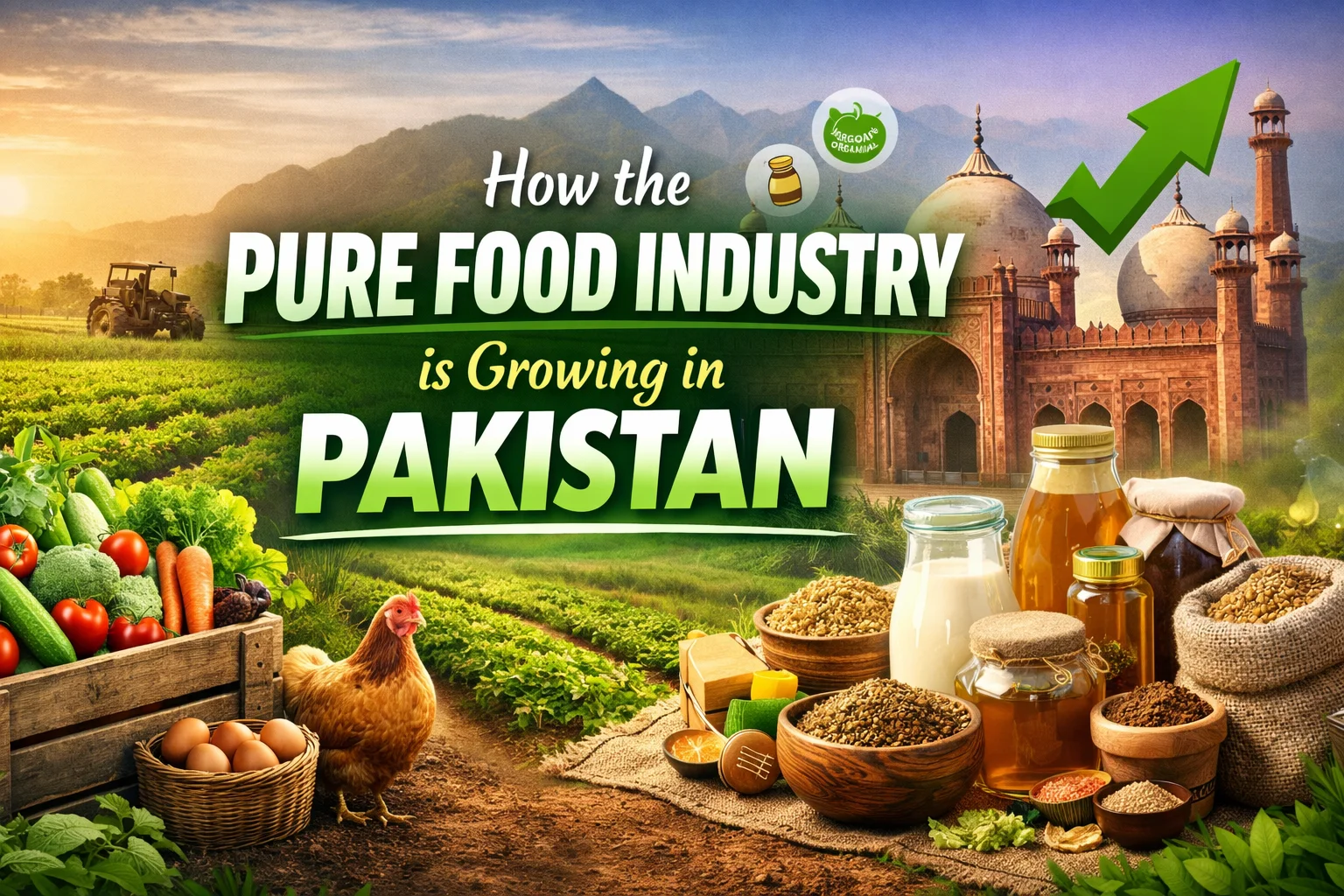
The demand for pure, organic, and chemical-free food is rapidly increasing across Pakistan. Over the last decade, consumers have become more conscious about what they eat, how their food is produced, and the impact it has on health. This shift in consumer behavior has led to the emergence of a rapidly expanding pure food industry that includes organic farms, chemical-free produce, farm-to-table brands, and health-focused food startups.
From organic fruits and vegetables to natural honey, desi ghee, and pesticide-free grains, Pakistan’s pure food market is gradually transforming the country’s food ecosystem. As awareness grows and technology enables direct farmer-to-consumer connections, this industry is becoming one of the most promising sectors in Pakistan’s agricultural and food economy.
The Rising Demand for Pure and Organic Food
Consumers in Pakistan are increasingly prioritizing health, nutrition, and food safety. Concerns about pesticides, artificial additives, and adulterated products have pushed people to look for pure and naturally produced food.
Organic food sales and consumption have grown significantly in recent years. For example, the sale of organic packaged food and beverages in Pakistan increased by 29% in 2020, compared to only 2% growth in the overall packaged food market.
This growth clearly indicates a strong shift in consumer preferences. Urban populations in cities like Islamabad, Lahore, and Karachi are actively seeking:
- Organic vegetables and fruits
- Chemical-free wheat and grains
- Desi dairy products
- Raw honey and natural sweeteners
- Farm-raised poultry and eggs
Health awareness campaigns, social media education, and the influence of global wellness trends have accelerated this transformation.
Pakistan’s Agricultural Advantage
Pakistan has natural conditions that are ideal for producing pure and organic food. The country’s fertile soil, diverse climate zones, and traditional farming practices make it suitable for growing a wide range of organic products.
Regions such as Northern Punjab, Khyber Pakhtunkhwa, Gilgit-Baltistan, and Balochistan are particularly well suited for organic farming due to favorable soil conditions and relatively low chemical usage.
Some of Pakistan’s most promising organic products include:
- Basmati rice
- Chaunsa mangoes
- Citrus fruits (especially kinnow)
- Walnuts and pine nuts
- Organic wheat and maize
- Herbs and medicinal plants
Pakistan is also home to thousands of plant species used for herbal medicine, creating opportunities in both food and wellness markets.
Growth of Organic Farming
Organic farming is gradually gaining popularity among Pakistani farmers. Many farmers are shifting toward sustainable agricultural practices that avoid synthetic fertilizers and pesticides.
Reports suggest that organic farming in Pakistan has been growing at an average rate of around 15% per year over the past decade.
Farmers are adopting techniques such as:
- Crop rotation
- Natural pest control
- Organic fertilizers and manure
- Indigenous seeds
- Soil regeneration practices
These methods not only improve soil health but also produce more nutritious food while protecting the environment.
In many cases, organic farming also increases profitability. Farmers have reported earning significantly higher profits compared to conventional crops because organic products command premium prices in the market.
The Role of Startups and Local Brands
Another major factor behind the growth of the pure food industry is the emergence of food startups and direct-to-consumer brands.
These businesses focus on transparency, quality, and trust. Instead of relying on traditional supply chains, many brands connect consumers directly with farms.
Examples of growing business models include:
- Farm-to-door organic vegetable delivery
- Chemical-free dairy products
- Cold-pressed oils
- Organic honey brands
- Natural herbal products
- Healthy meal plan services
Digital platforms and social media marketing have made it easier for small producers to reach urban consumers who are willing to pay more for healthier food options.
Export Opportunities for Pakistan
The global demand for natural and organic food is increasing rapidly. The worldwide organic food market is expected to grow from $253 billion in 2025 to over $660 billion by 2034, reflecting strong global demand for clean and sustainable food products.
Pakistan has significant export potential in this sector.
Food exports from Pakistan already reached $5.8 billion in 2023, with products such as rice, dry fruits, and specialty salts gaining strong international demand.
With proper certification, branding, and quality control, Pakistan could become a major exporter of:
- Organic fruits and vegetables
- Halal organic meat
- Herbal products and medicinal plants
- Organic spices
- Natural honey and bee products
Experts believe that organic agriculture could potentially generate billions of dollars in foreign exchange for the country if properly developed.
Challenges Facing the Pure Food Industry
Despite its rapid growth, the pure food industry in Pakistan still faces several challenges.
1. Lack of Certification Infrastructure
Many farmers struggle to obtain internationally recognized organic certifications, which limits export opportunities.
2. Higher Production Costs
Organic farming often requires more labor and careful management, increasing production costs.
3. Consumer Trust Issues
Due to widespread food adulteration in markets, many consumers find it difficult to trust whether a product is truly organic.
4. Limited Supply Chains
Cold storage, logistics, and distribution networks for organic food are still underdeveloped.
Addressing these challenges will be essential for the industry to reach its full potential.
The Future of Pure Food in Pakistan
The future of Pakistan’s pure food industry looks promising. Rising health awareness, growing middle-class incomes, and increasing global demand for organic products are expected to drive continued growth.
Several trends will shape the future of this sector:
- Expansion of organic farming initiatives
- Increased government support and certification systems
- Growth of agri-tech and digital marketplaces
- Greater investment in food startups
- Expansion of export markets
If these trends continue, Pakistan could emerge as a major regional hub for organic and pure food production.
Conclusion
The pure food industry in Pakistan is transitioning from a niche market into a powerful economic opportunity. With rising health awareness, growing consumer demand, and strong agricultural potential, the sector is poised for significant expansion.
From organic farms to modern food startups, Pakistan is witnessing a transformation in the way food is produced, distributed, and consumed. By improving certification systems, investing in technology, and supporting farmers, the country can unlock the full potential of its natural resources.
In the coming years, pure food will not just be a lifestyle choice, it will become a major driver of Pakistan’s agricultural innovation, economic growth, and public health improvement.