
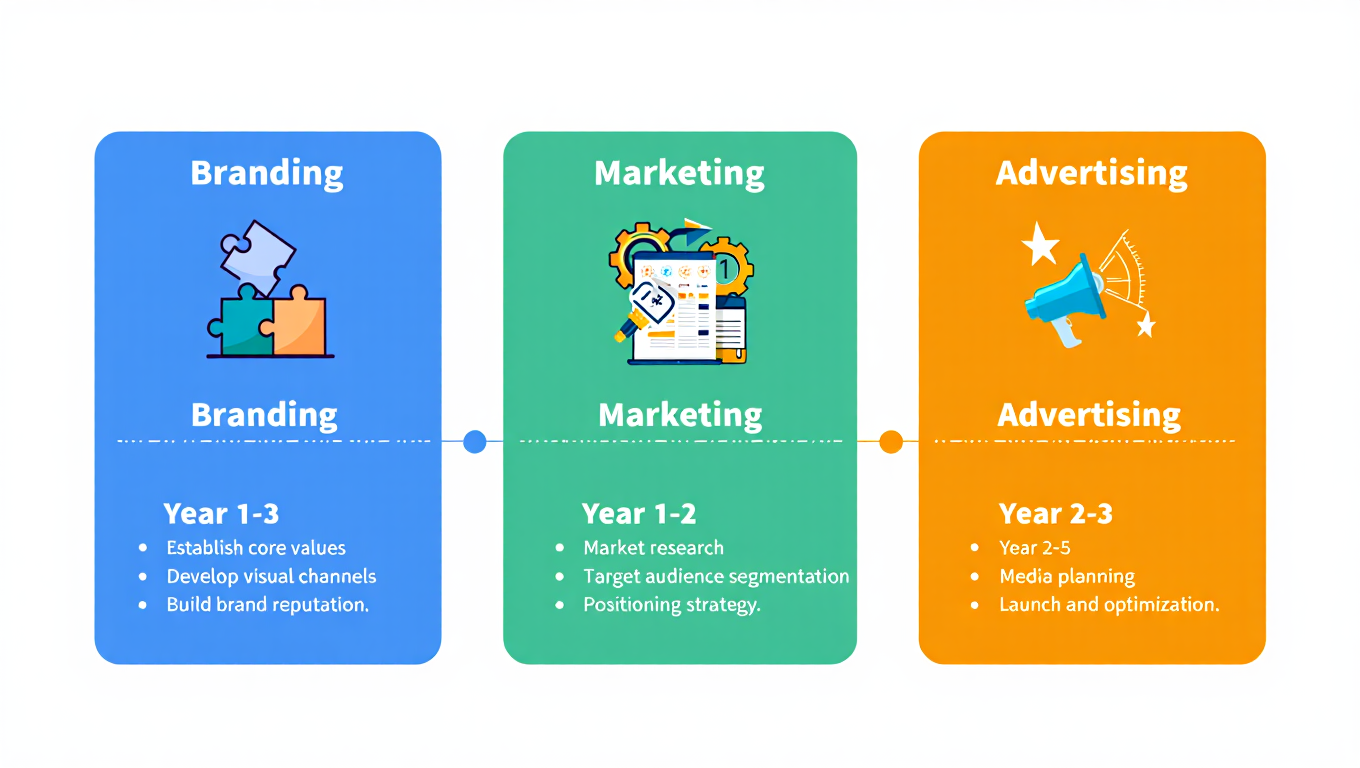
In business, few terms are as widely used, and widely misunderstood, as branding, marketing, and advertising. People often use them interchangeably, but treating them as synonyms is a mistake that can cost businesses clarity, direction, and ultimately growth.
This guide will break down the distinctions, show how they connect, and explain why branding forms the foundation for marketing and advertising to succeed.
1. The Three Pillars: Branding, Marketing, and Advertising
What is Branding?
Branding is about identity and perception. It defines who you are, what you stand for, and how you want people to perceive you. A brand is not just a logo or slogan, it’s the emotional and psychological relationship your audience has with your business.
- Purpose: Create recognition, build trust, and influence choice.
- Tools: Visual identity, tone of voice, brand story, values, customer experience.
- Outcome: Loyalty, differentiation, reputation.
Think of branding as your DNA. It is the essence of your business, and it drives everything else.
What is Marketing?
Marketing is the strategy and activities used to promote and distribute your products or services. It is how you communicate value to your target audience and persuade them to engage with you.
- Purpose: Generate demand and attract the right customers.
- Tools: Market research, pricing strategy, content marketing, social media, PR, promotions, events.
- Outcome: Awareness, engagement, conversions.
Marketing answers the “how.” It is the roadmap that takes your brand to the people who matter.
What is Advertising?
Advertising is a subset of marketing, focused specifically on paid messages that aim to inform, persuade, or remind audiences about your offerings.
- Purpose: Amplify a specific message and trigger action.
- Tools: TV, radio, print, billboards, digital ads (Google, Facebook, Instagram), sponsorships.
- Outcome: Reach, leads, sales.
Advertising answers the “what.” It’s the megaphone that ensures your brand message is heard.
2. Branding vs Marketing vs Advertising: The Key Differences
It helps to think of branding, marketing, and advertising as three layers that build on one another. Each has its own focus, timeframe, and outcome.
- Branding is about identity and perception. It shapes how people see you, what values you represent, and what emotional connection you build. Branding is a long-term effort focused on building trust, loyalty, and recognition. For example, Apple positions itself around design and innovation.
- Marketing is about strategy and execution. It involves market research, pricing, distribution, and communication. Marketing is mid- to long-term, focused on generating awareness and creating demand. Apple’s product launches, influencer partnerships, and events are marketing in action.
- Advertising is about paid communication. It’s a narrower activity under marketing, focused on delivering specific messages to a target audience through channels like social media, TV, radio, or billboards. Advertising tends to be shorter-term, aiming for immediate impact like leads or sales. Apple’s iPhone commercials and YouTube ads are examples.
So in simple terms:
- Branding = Who you are
- Marketing = How you reach people
- Advertising = What you say to get attention
When these three work together, the result is stronger than the sum of their parts.
3. Why Branding Comes First
Without branding, marketing lacks direction and advertising lacks depth. A weak or unclear brand means:
- Marketing campaigns look scattered.
- Ads may generate clicks but fail to build long-term loyalty.
- Customers struggle to understand why they should choose you over competitors.
A strong brand, on the other hand:
- Guides messaging and creative direction.
- Makes marketing campaigns more consistent.
- Increases advertising effectiveness because customers already trust you.
In other words, branding is the glue that holds everything together.
4. Real-World Examples
Example 1: Nike
- Branding: Inspires athletic performance with “Just Do It.”
- Marketing: Sponsorships, influencer partnerships, global campaigns.
- Advertising: Paid commercials featuring athletes and digital ads on platforms like YouTube.
Example 2: Coca-Cola
- Branding: Happiness, togetherness, nostalgia.
- Marketing: Experiential campaigns (Share a Coke), seasonal packaging.
- Advertising: Global TV ads, billboards, sponsorship of major events.
Example 3: A Startup Coffee Shop
- Branding: Eco-conscious, community-driven café.
- Marketing: Loyalty programs, social media storytelling, collaborations with local artists.
- Advertising: Instagram ads for new seasonal drinks.
5. Branding, Marketing, and Advertising Working Together
You can think of the relationship like this:
- Branding is the soul.
- Marketing is the voice.
- Advertising is the megaphone.
Together, they create synergy. Branding builds meaning, marketing builds reach, and advertising builds urgency.
6. Common Mistakes Businesses Make
- Starting with ads before defining a brand. Running campaigns without a clear identity leads to wasted budgets.
- Confusing branding with marketing. Branding is who you are; marketing is how you share it.
- Over-relying on advertising. Paid ads can bring short-term sales, but without strong branding, loyalty never sticks.
- Inconsistent branding across channels. A mismatch in tone, visuals, or messaging confuses customers.
7. The ROI of Clarity
Businesses that align branding, marketing, and advertising enjoy:
- Lower customer acquisition costs.
- Higher lifetime value.
- Better word-of-mouth and organic referrals.
- Stronger resilience in downturns.
That’s why global companies invest billions in brand equity, it pays off over decades.
8. Final Thoughts
Branding, marketing, and advertising are distinct, but they are not rivals—they are partners. Branding provides the identity, marketing provides the roadmap, and advertising provides the amplification.
Treat branding as the “why,” marketing as the “how,” and advertising as the “what.” When aligned, they create lasting business impact that no competitor can easily replicate.
(To dig deeper into branding’s foundations, check out Introduction to Branding where we explore the principles in more depth.)